
Fallen Lineage Enemies and Matchups
Last updated:
Choose targets, damage types, and control skills around each enemy’s traits. Compare enemies across Forest, Crypt, and Catacombs, then use the matchup advice to coordinate your attacks.
Use strong single hits to trigger Tomb Guard’s Off-balance, but open with a smaller hit against Keeper Guard or Chief’s Guard to consume Shell before your heavier attacks. Clear small Wolves before Alpha Wolf strengthens them, use ranged attacks or spells against Thorny Brigands, and choose Holy damage against Skeletons and Ghouls. Check temporary control immunity and encounter modifiers before committing skills.
Enemies by Region
Forest mixes armed enemies with wolf packs; Crypt adds Bloodless guards and Risen; Catacombs combines undead enemies with elite Keeper Guards. Alpha Wolf strengthens its pack, while Keeper Guards reward coordinated hit order and control.
Match HP values to the enemy’s level, difficulty, and party size. For example, Level 13 Tomb Guards have 308 maximum HP in four-player Normal encounters and 389 in the four-player Nightmare encounters listed here. Use the current target’s maximum HP when planning a damage threshold.
Enemy Directory
Open an enemy’s name for its full attributes, encounter conditions, and matchup tips.
Enemies by region, traits, and attacks.
16 objects
|
|
The Road; Forest | — | Pommel Strike | ||||||||||||||
|---|---|---|---|---|---|---|---|---|---|---|---|---|---|---|---|---|---|
|
A sword-wielding enemy encountered in the tutorial and Forest battles. It uses Pommel Strike.
|
|||||||||||||||||
|
|
The Road; Forest | Thorny | Twin Cut; Deep Cut | ||||||||||||||
|
A dual-blade enemy encountered in Forest battles. Its attacks inflict Bleed, and its Thorny trait retaliates against melee hits.
TipsUse ranged or spell attacks to avoid Thorny's melee retaliation when those attacks fit your party's options. |
|||||||||||||||||
|
|
Forest | — | — | ||||||||||||||
|
A sword-wielding enemy encountered in Forest battles, including Roadside Ambush and Highwaymen.
|
|||||||||||||||||
|
|
The Road; Forest | Shell; Unsteady | Lunge; Pommel Strike | ||||||||||||||
|
A sword-and-shield enemy that appears in Forest encounters and accompanies Bandit Chief. It has Shell and Unsteady.
TipsSpend a lower-cost hit on Shell's first-hit reduction, then concentrate stronger attacks. Continue with the Bandit Chief strategy. |
|||||||||||||||||
|
|
Forest | Plated | — | ||||||||||||||
|
A sword-wielding enemy encountered in The Watch Patrol. Its Plated trait grants additional Armor.
|
|||||||||||||||||
|
|
Forest | Flammable | Lunge Bite | ||||||||||||||
|
A Forest enemy encountered in packs and alongside Alpha Wolf. It uses Lunge Bite and has Flammable.
|
|||||||||||||||||
|
|
Forest | Hardened; Flammable; Exposed | Howl | ||||||||||||||
|
An elite wolf encountered with smaller wolves in The Alpha's Pack. It uses Howl to strengthen itself and an accompanying Wolf.
TipsClear the smaller Wolves to reduce the value of Howl. Use Fire against Flammable and follow-up hits against Exposed; Hardened removes critical-hit bonus damage. |
|||||||||||||||||
|
|
Crypt | Flammable; Exposed | Gnaw | ||||||||||||||
|
A Crypt enemy encountered in groups and alongside other enemies. Its Gnaw attack inflicts Bleed.
|
|||||||||||||||||
|
|
Crypt | Bloodless; Off-balance | Lunge; Pommel Strike | ||||||||||||||
|
A Crypt guard with Bloodless and the Off-balance weakness. It uses Lunge and Pommel Strike.
Tomb Guard
TipsFor a Level 13 four-player Tomb Guard, the 15% single-hit threshold is 46.2 damage at 308 HP or 58.35 at 389 HP. Steadfast blocks the resulting Stun. Check encounter Shield before committing the hit. |
|||||||||||||||||
|
|
Crypt | — | Twin Cut | ||||||||||||||
|
A Crypt enemy encountered with Tomb Guards or Crypt Rats. It uses Twin Cut and inflicts Bleed.
Grave Robber
|
|||||||||||||||||
|
|
Crypt | Bloodless | Pommel Strike | ||||||||||||||
|
An armored Crypt enemy with Bloodless. It uses Pommel Strike.
TipsChoose effective direct or elemental damage against Bloodless instead of relying on Bleed or Poison. |
|||||||||||||||||
|
|
Catacombs | Bloodless; Unholy; Shadowborn | Lunge; Pommel Strike | ||||||||||||||
|
An undead Catacombs enemy encountered in route battles and alongside The Red Lich. It has Bloodless, Unholy and Shadowborn.
|
|||||||||||||||||
|
|
Catacombs | — | Twin Cut | ||||||||||||||
|
A Catacombs enemy encountered alongside Ghoul. It uses Twin Cut to inflict Bleed.
|
|||||||||||||||||
|
|
Catacombs | Bloodless; Unholy; Shadowborn; Exposed | Twin Cut | ||||||||||||||
|
A dual-blade undead enemy encountered in Catacombs alongside Robbers. It uses Twin Cut.
|
|||||||||||||||||
|
|
Catacombs | Shell; Unsteady | Lunge; Pommel Strike | ||||||||||||||
|
An elite Catacombs guard with Shell and Unsteady. It uses Lunge and Pommel Strike.
TipsAccount for Shell before spending a heavy hit. Use the control-duration benefit from Unsteady when the guard is susceptible, and check the encounter's damage modifier. |
|||||||||||||||||
|
|
Catacombs | Frail | — | ||||||||||||||
|
A Catacombs enemy encountered alongside a Skeleton in A Mourner and the Dead. It has Frail.
TipsIn A Mourner and the Dead, concentrate damage on the Mourner before moving to the remaining Skeleton. |
|||||||||||||||||
Choose Targets and Damage Types
Tomb Guard: trigger Off-balance with one strong hit
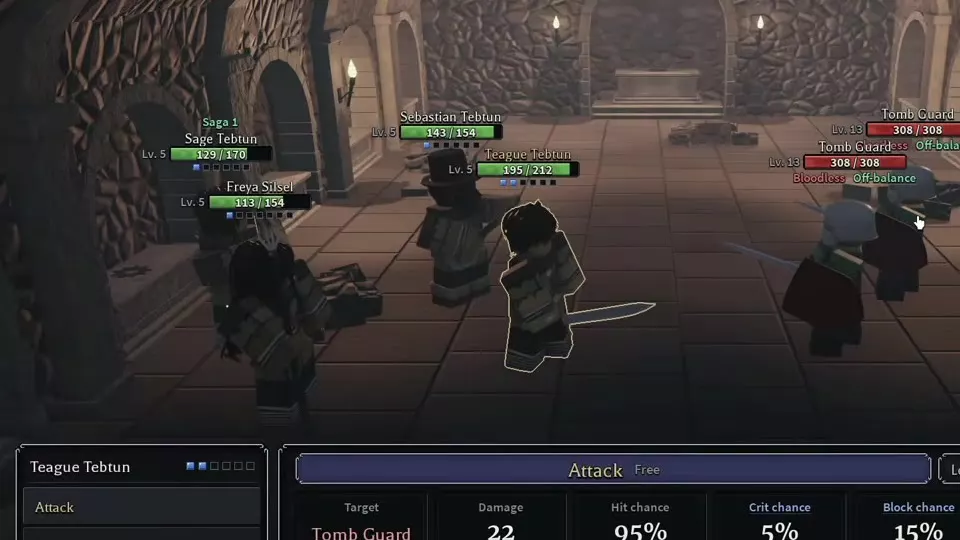
Off-balance applies Stun for 1 turn when a single hit deals at least 15% of Tomb Guard’s maximum HP. Several smaller hits do not combine to meet the requirement.
For a Level 13 Tomb Guard in a four-player encounter:
| Difficulty | Maximum HP | Single-hit threshold |
|---|---|---|
| Normal | 308 HP | 46.2 damage |
| Nightmare | 389 HP | 58.35 damage |
In a mixed fight with Tomb Guards and a Crypt Rat, remove the rat first when you can finish it quickly. This reduces incoming attacks while you prepare stronger hits for the guards. Once one guard is controlled, attack another active enemy if you can defeat it or trigger its weakness.
Check Steadfast before spending control skills. It blocks Stun, Freeze, Asleep, Fear, Silence, and Taunted, including the Stun from Off-balance. Damage and Burn remain useful during that immunity window.
If you use Lullaby, direct attacks elsewhere to preserve Asleep. Any damage, including existing Burn, ends sleep, and ending Asleep grants Steadfast; do not count on the wake-up hit also stunning the guard. Check starting Shield as well: the Tomb Guards elite encounter has a configuration in which both guards and their Grave Robber ally begin with 25 Shield each.
Keeper Guard: consume Shell before heavy attacks
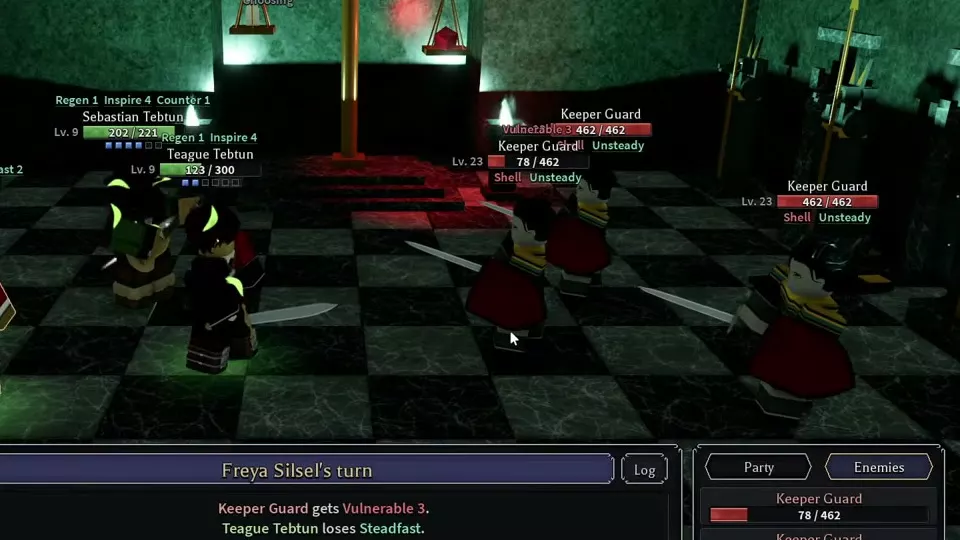
Keeper Guard has Shell, which halves damage from the first hit it receives each round. Open with a smaller hit, then send stronger attacks into that same guard. Finish a wounded target before spreading damage across the group.
Unsteady adds 1 turn to Stun, Asleep, Fear, Silence, and Slow applied to the guard. Bring a skill that actually applies control: Keeper Guard does not have Tomb Guard’s Off-balance weakness, so a large hit alone does not supply Stun. Check Steadfast before applying the control effects it blocks.
Burn and Bleed both work against Keeper Guards, giving the party damage while recovering Energy or health. Their Pommel Strike applies Stun, including on a blocked hit, so blocking that attack does not guarantee you retain your next action. The Normal four-player Keeper Guards encounter also has a 25% increased damage modifier; account for that additional pressure when choosing the fight.
Concentrated follow-up damage removes an enemy turn sooner. In that encounter, Lunge dealt 41 damage and applied Vulnerable 3 to one guard; Firebolt then dealt 98 damage to finish its remaining 78 HP.
Alpha Wolf: remove the pack, then coordinate follow-up hits
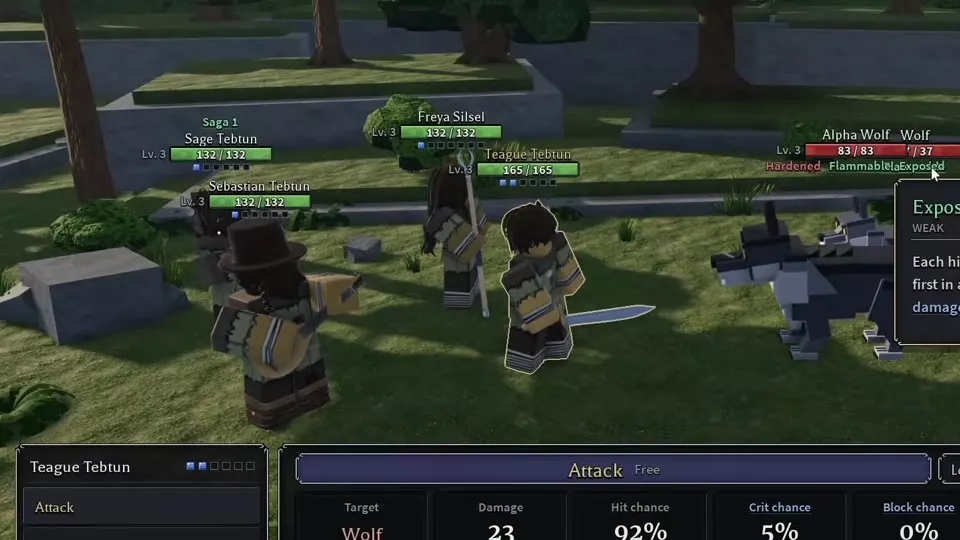
Defeat small Wolves to reduce incoming attacks and Bleed pressure from Lunge Bite. Alpha Wolf’s Howl grants itself and an accompanying Wolf Inspire 2, making surviving pack members more dangerous. Assign enough damage to finish a small Wolf; another teammate can attack Alpha Wolf while that target is being removed.
- Flammable: Wolves and Alpha Wolf take 25% increased Fire damage. Favor Fire attacks when they fit your available skills.
- Exposed: Alpha Wolf takes 25% increased damage from each hit after the first against it in the same round. Coordinate follow-up attacks within that round.
- Hardened: Critical hits against Alpha Wolf deal normal damage. Choose attacks for their direct damage and useful effects instead of relying on a critical damage bonus.
Use a free Attack when Energy is too low for Lunge and the target preview gives you enough damage to finish a small Wolf.
Brigand: avoid Thorny’s melee retaliation
Thorny returns True damage when a melee hit strikes Brigand, and the retaliation increases with its level. Assign a ranged attacker or spellcaster to the Brigand while melee teammates attack another enemy.
If melee is your available option, finish the Brigand promptly and account for retaliation plus any existing Bleed. Twin Cut hits twice, and both Twin Cut and Deep Cut inflict Bleed. Killing the target does not remove Bleed already affecting your character. When Energy prevents another Lunge, use a free Attack if its preview is enough to finish the enemy.
Chief’s Guard: coordinate the opener and remove enemy actions
Chief’s Guard shares Keeper Guard’s Shell and Unsteady. Use a smaller opening hit to consume the round’s 50% first-hit reduction, then follow with stronger damage. An opener that applies Vulnerable also prepares the next attacker: in a four-player Hard boss encounter, Lunge dealt 27 damage and applied Vulnerable 3, then Firebolt dealt 70 damage to defeat the guard’s remaining 48 HP.
Prioritize a target you can remove this round. A low-HP Brigand is a useful early removal target in a mixed encounter; alongside Bandit Chief, focus the guard first to eliminate its additional attacks. Its Lunge applies Vulnerable, and Pommel Strike applies Stun. Use Unsteady’s extra control duration while the guard is susceptible.
Undead enemies: match damage to their actual traits
Skeletons and Ghouls take 50% increased Holy damage from Unholy and 50% reduced Shadow damage from Shadowborn. Favor Holy over Shadow against those targets. Ghoul also has Exposed, rewarding repeated hits within the same round with 25% increased damage after the first hit.
Bloodless prevents Bleed and Poison on Skeletons, Ghouls, Risen, and Tomb Guards. Use effective direct damage and applicable elemental attacks instead of relying on those statuses. Burn works against Risen, Tomb Guards, and Skeletons. A skill with a Bleed component still supplies its direct damage against Bloodless; judge whether that direct damage is worth the action and Energy.
Risen’s Bloodless does not give it Skeleton’s Holy weakness or Shadow resistance. Choose from the traits on the specific target.
Traits, Encounters, and Bosses
Enemy traits determine defenses and weaknesses; encounter modifiers add conditions to a particular fight. Starting Shield on a Tomb Guards encounter and increased damage on a Keeper Guards encounter belong to those encounters, rather than every enemy with the same name.
- Use the enemy traits reference for the complete trait effects and conditions.
- Check status effects and reactions for Steadfast, sleep, damage over time, and control interactions.
- Find enemy groups, route choices, and encounter modifiers in Forest events, Crypt events, and Catacombs events.
- Compare boss defenses and phase rules in bosses and resistances.